Media Trendlines — June 29, 2026
📰 Key Themes
- The Washington Post put hard numbers on the cost of the subscribe-or-leave paywall — 74% of readers walk and barely 1% convert — and found a $2 single-article option grows paying users faster than any subscription prompt.
- The readers flexible pricing reaches are mobile-first and arrive from search and social, reading lifestyle and investigative work over politics — exactly the audience an AI summary is most likely to intercept.
- The Committee to Protect Journalists is auditing its own widely-cited Gaza casualty count after finding it had listed some combatants as journalists.
- Private equity keeps treating live events as a hedge against AI, and Australia’s ad market kept contracting — more signs the money is moving toward owned audiences and first-party data.
Jump to: 💡 Business Model Innovation · 📺 Big Media Moves · 📎 Also Noted · 🧭 Takeaways
💡 Business Model Innovation
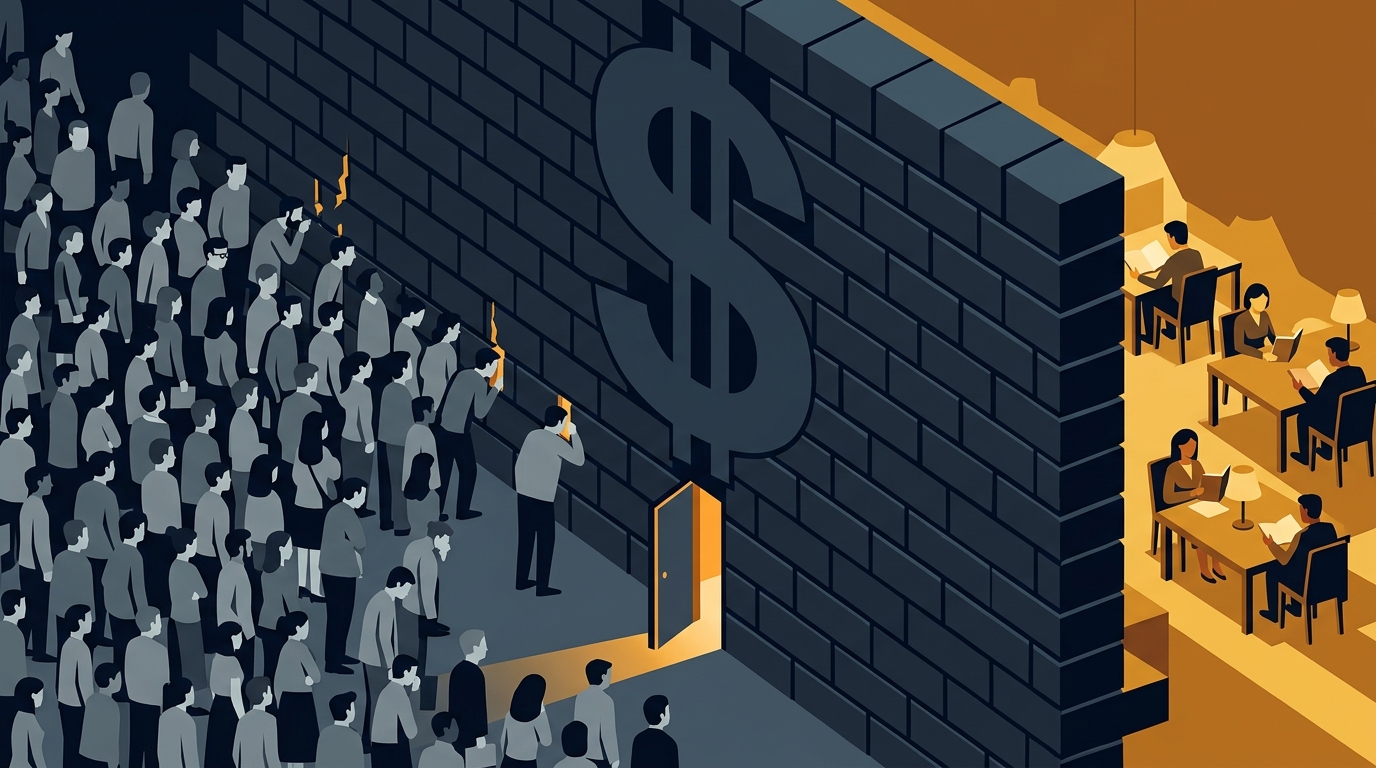
The Washington Post Put a Price on the Readers Its Paywall Was Throwing Away
Source: The Audiencers (Madeleine White), reporting a session by Anjali Iyer, Global Head of Subscriptions at The Washington Post
For a decade the digital subscription was treated as the destination: get the loyal reader to commit, and the rest is churn management. The Washington Post just published the math on what that binary leaves behind. Of 100 anonymous readers who hit a hard paywall, 74 leave outright and roughly one subscribes. Of that one, 13% cancel the next day — they bought a single story and left — and 40% are gone within six months. The hard paywall, in other words, is a filter that rejects almost everyone and barely holds the few it keeps.
So the Post sized the rejected market. Its U.S. research found 19 million news-interested readers who want flexible access and 12 million willing to pay for the right short-term product. It tested three: a week pass (appealing to 62% of those surveyed, priced at $4, $7 and $10), a day pass (57%), and pay-per-article — a $2 one-time unlock wired directly into the paywall with Apple Pay (46%). Run alongside the usual subscription prompts, flexible access lifted overall conversion 1.2x and improved long-term retention by six points. The blunt-instrument number: pay-per-article alone drove an 83% lift in total paying users, far ahead of the day pass (35%) or week pass (19%).
The detail that should change how publishers think about the funnel is who these buyers are. They are not downgraded subscribers. They skew mobile-first, pay with Apple Pay, and arrive through search and social with a specific question in mind — and they over-index on lifestyle, wellness, investigative features and the archive rather than the politics-and-opinion diet that drives core subscribers. That is precisely the reader an AI assistant is most likely to satisfy with a summary before they ever reach the page. Flexible pricing is the first monetization model built for the drive-by audience instead of pretending it doesn’t exist — and over a 180-day window, 8% of week-pass buyers convert to full subscriptions anyway, so the transactional door turns out to be an acquisition channel, not a discount.
The willingness to pay and the willingness to commit are different markets, and the industry spent ten years pricing only the second one. A reader who will hand over $2 for an article they came for is not a failed subscriber; they are a customer the paywall was configured to turn away. The question every publisher should be asking is how much revenue their own funnel has been rejecting on principle.
The WordPress angle: The Post ran this on Arc XP, and that is the real tell. Once monetization becomes a spectrum — pay-per-article widgets, day passes, identity, first-party data, the terms on which an AI agent is allowed to read a page — the logic moves into the CMS and identity layer, not the marketing team. The strategic decision stops being “what’s our subscription price” and becomes “do we build the monetization stack or rent it,” and whoever owns that layer owns the experiments.
📺 Big Media Moves
The Committee to Protect Journalists Is Auditing Its Own Gaza Death Toll
Source: Status (Oliver Darcy, Jon Passantino) ⚠️ Paywalled — summary based on available preview only.
The Committee to Protect Journalists has launched a review of its widely-cited Gaza journalist casualty database after discovering it had listed some combatants among the reporters it counts as killed. For an organization whose tallies are quoted in nearly every story about the dangers of covering the war, a self-audit is the only defensible response — but the error itself is costly.
Advocacy data is infrastructure. When a single number becomes the figure newsrooms reach for to describe a conflict, getting it exactly right is the whole job, because every mistake hands ammunition to the people who want to dismiss the wider toll entirely. The credibility of the count is what gives it force; CPJ is right to fix it in the open, and the rest of the industry should treat the episode as a reminder to source these figures with the same rigor it would demand of any other claim it republishes.
📎 Also Noted
🔹 Easyfairs took full control of Scandinavian organizer Nordic Live Expo, another European events business rolled up as private equity keeps buying live events as a hedge against AI. (A Media Operator)
🔹 Samsung Australia is moving its creative in-house, pulling work from its agency — one more brand deciding it can do the production itself. (Mumbrella)
🔹 Status also reports a courtroom setback for Alan Dershowitz in a case against CNN and yet another “60 Minutes” producer heading for the exit. (Status) ⚠️ Paywalled
🧭 Takeaways
- The hard paywall is a filter, not a business model. If it rejects three-quarters of readers and converts one in a hundred, the question isn’t how to defend it — it’s how much money it has been trained to refuse.
- Price the drive-by reader before AI does. Search-and-social arrivals reading a single feature are the audience assistants intercept first; a frictionless one-article unlock is the only way to capture value from a visit that was never going to become a subscription.
- The monetization layer is becoming the platform decision. Passes, micropayments, identity and AI-access terms now live in the CMS; publishers should decide deliberately whether they own that stack or rent it, because it determines how fast they can experiment.
- Advocacy data deserves newsroom-grade rigor. A figure repeated in every story carries the weight of reporting; treat the numbers you republish from any organization as claims to verify, not facts to borrow.